
 +86 18501566670
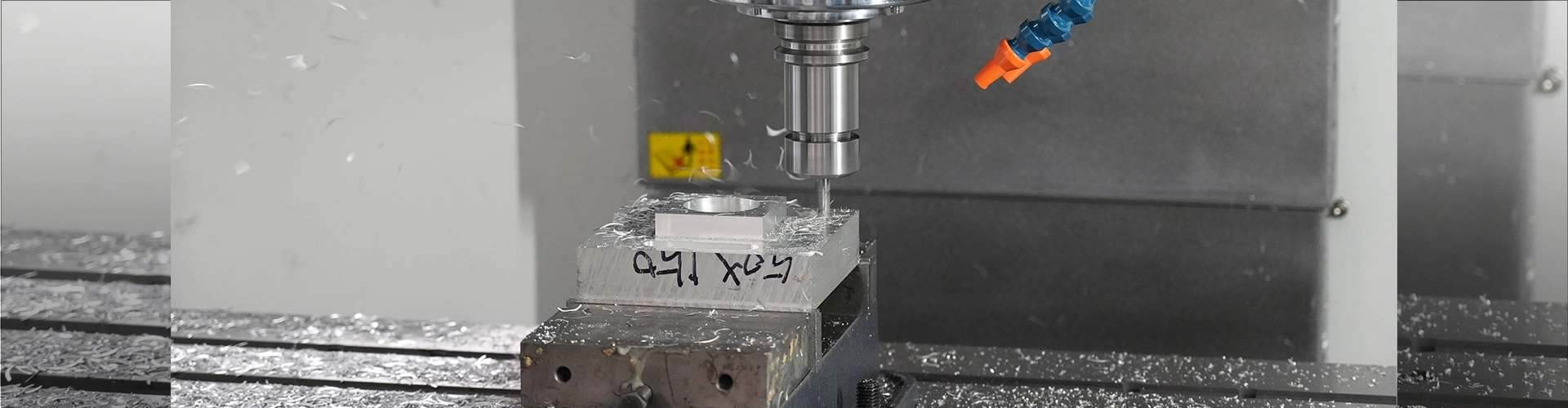

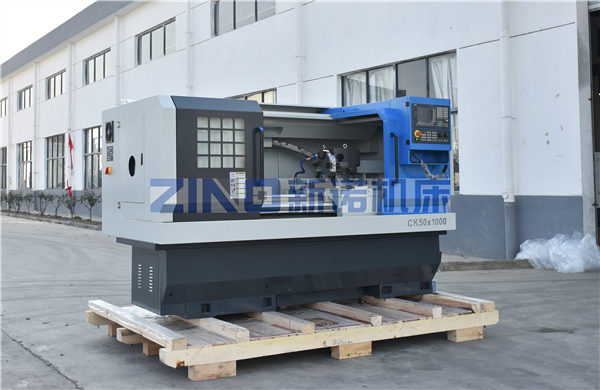
Maintenance and Upkeep of turning machine CK500
 Time:2025-12-10
  Visits:506
The turning machine CK500 is a widely used precision equipment in mechanical processing,and scientific maintenance and upkeep are the core to ensure its processing accuracy,extend service life,and reduce downtime.Below is a systematic maintenance and upkeep plan for the CK500,covering daily,periodic,and special maintenance dimensions.
1.Daily Maintenance(Pre-shift,In-shift,Post-shift)
Daily maintenance is the foundation of equipment stability and needs to be completed by the operator during each shift.
-Pre-shift inspection
1.Check the appearance of the equipment for looseness of external fasteners(such as the fixing bolts of the spindle housing and tool rest)and abnormal damage.
2.Verify the oil level of each lubrication point(spindle bearing,guide rail,ball screw)against the oil level gauge;replenish lubricating oil that is below the standard line in a timely manner,and ensure the oil type complies with the equipment manual requirements(usually 46 anti-wear hydraulic oil or special CNC machine tool lubricating oil).
3.Inspect the hydraulic system for oil leaks at pipe joints and check the hydraulic oil tank level;start the hydraulic pump to confirm normal pressure(generally 3–5 MPa).
4.Power on the CNC system,check the display for error codes,and test the movement of the X-axis and Z-axis to ensure no jamming or abnormal noise.
-In-shift monitoring
1.Observe the operating status of the spindle in real time:monitor spindle speed stability and bearing temperature(the surface temperature should not exceed 60°C,and there should be no abnormal noise such as whistling or clicking).
2.Pay attention to the lubrication system:confirm that the automatic lubrication pump works periodically and that the guide rail and screw are evenly coated with oil film to avoid dry friction.
3.Clean up iron chips and coolant residues in the chip removal area in a timely manner to prevent chips from entering the guide rail or spindle gap and causing precision loss.
-Post-shift finishing
1.Power off the equipment in accordance with the standard procedure,and clean the surface of the machine tool,tool rest,and chuck with a clean cloth;wipe off coolant and cutting fluid to prevent rust.
2.Apply anti-rust oil to the workpiece clamping surface of the chuck and the surface of the tool holder to avoid corrosion during shutdown.
3.Record the equipment operation status(such as processing parts quantity,abnormal phenomena during operation)in the maintenance log for subsequent tracking.
2.Periodic Maintenance(Weekly,Monthly,Quarterly,Annual)
Periodic maintenance requires professional maintenance personnel to conduct in-depth inspections and maintenance,with clear cycle standards:
-Weekly maintenance
1.Clean the filter of the coolant tank,remove sediment and impurities in the tank,and replace the coolant if it is turbid or deteriorated to prevent blockage of the cooling pipeline.
2.Inspect the tightness of the tool holder and the wear of the tool clamping mechanism;replace the worn clamping parts in a timely manner to ensure tool stability during processing.
3.Check the tightness of the electrical cabinet door and clean the dust on the surface of the electrical components inside the cabinet with a dry air gun to prevent short circuits caused by dust accumulation.
-Monthly maintenance
1.Test the positioning accuracy and repeat positioning accuracy of the X-axis and Z-axis with a dial indicator or laser interferometer,and adjust the servo motor parameters or ball screw preload if there is deviation.
2.Drain and replace the lubricating oil of the spindle bearing,and check the bearing clearance;if the clearance exceeds the standard,replace the bearing in time to avoid affecting processing precision.
3.Inspect the hydraulic system's oil filter and replace the filter element;sample and test the hydraulic oil for viscosity and water content,and replace the oil if it fails to meet the standard.
-Quarterly maintenance
1.Disassemble and clean the chip removal device,check the wear of the chip removal chain or screw,and lubricate the transmission parts;replace severely worn components to ensure smooth chip removal.
2.Inspect the cable connections of the CNC system and servo drive,check for aging or damage of the cables,and reinforce loose terminals to prevent signal interruption.
3.Verify the safety protection devices(such as emergency stop button,door interlock switch)to ensure they can be triggered normally and play a protective role.
-Annual maintenance
1.Conduct a comprehensive disassembly inspection of the spindle unit,replace the sealing ring and bearing if necessary,and re-calibrate the spindle runout to ensure it is within the range of≤0.005mm.
2.Replace all lubricating oil and hydraulic oil of the equipment,clean the oil tank and pipeline,and remove internal oil stains and impurities.
3.Update the firmware of the CNC system(if there is an official update)and conduct a full-axis performance test of the equipment to restore the overall performance of the machine tool to the optimal state.
3.Special Maintenance(After Fault,Long-term Shutdown)
-Maintenance after fault
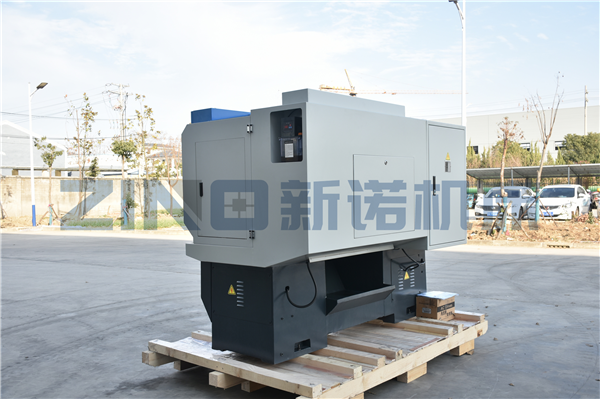
After the equipment fails(such as spindle stuck,axis movement deviation),professional personnel should first record the fault code and phenomenon,then conduct targeted troubleshooting;after repairing the faulty parts,conduct a precision test and trial operation to confirm that the equipment can run stably before putting it into production.
-Maintenance during long-term shutdown
If the CK500 is shut down for more than 1 month,drain all coolant and hydraulic oil,seal the pipeline interface;fully coat the guide rail,spindle,and chuck with anti-rust grease,cover the equipment with a dust cover;power on the CNC system for 1–2 hours every 15 days for low-speed operation of each axis to prevent component aging caused by long-term idleness.
4.Key Maintenance Notes
1.Lubrication management:Use lubricants that meet the equipment manual specifications,and record the lubrication time and oil type to avoid mismatched lubricants causing component wear.
2.Precision protection:Avoid collision between the tool and the workpiece or machine tool during operation;regularly calibrate the equipment precision,and do not modify the CNC system parameters without authorization.
3.Personnel specification:Operators must be trained before taking up posts,and professional maintenance personnel must be responsible for complex maintenance operations to prevent secondary damage to the equipment.
I can help you organize this maintenance content into a checklist-style maintenance form for the CK500 that is more convenient for on-site use.Do you need this?