
 +86 18501566670

What Is the Swing of a Lathe? Can You Turn Metal on a Wood Lathe?
 Time:2025-12-15
  Visits:2984
This document briefly explains the causes and solutions for vibration faults in CNC machine tools, using practical case studies.
The Z-axis of the machining center uses a servo motor to drive the ball screw through a synchronous toothed belt, and a Heidenhain linear encoder is used for position feedback to achieve full closed-loop control. After the Z-axis stops, a shaking phenomenon often occurs; the shaking position is not fixed and irregular.
2. Fault Analysis
Upon close observation, it was found that after the Z-axis stopped, the Z-axis servo motor first emitted a whistling sound, which then caused the entire spindle to shake. Since this axis uses full closed-loop control, the Z-axis is not absolutely stationary when it stops, but is in a dynamic position adjustment state. Therefore, it was suspected that the machine tool shaking was caused by closed-loop control oscillation.
The servo motor mounting tightness, the tension of the synchronous toothed belt, the looseness of the ball screw support bearings, the lubrication of the ball screw guide rails, and the balance cylinder pressure were all checked, but no obvious problems were found.
3. Solution
1) Attempt to optimize the Z-axis speed loop control parameters. By adjusting the speed loop gain and integration time, the dynamic characteristics of the speed loop were matched to the current mechanical state. In the FIDIA CNC system BRUCO drive management software (see Figure 1), the Z-axis parameter S05002 (speed loop gain) was adjusted from 6 to 4. The shaking disappeared. However, this method reduces the speed loop response speed and affects the Z-axis dynamic characteristics.
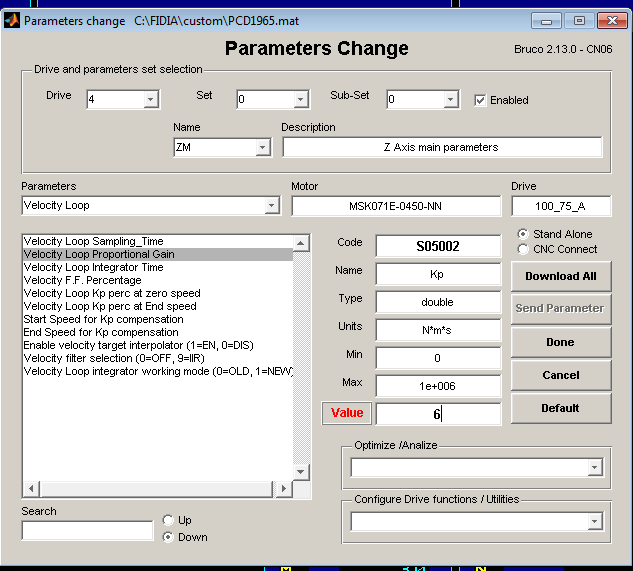
[Figure 1: BRUCO software]
2) Using a three-axis accelerometer, the vibration data of the Z-axis was recorded and analyzed. The sensor was installed on the ball screw nut and the servo motor, and a Z-axis reciprocating motion program was executed to record the Z-axis vibration state.
The reciprocating program is as follows:
G01 F10000; Run at a feed rate of F=10000 mm/min
Z0; Move to Z=0
G04 H4; Pause for 4s
Z-200.; Move to Z=200mm
G04 H4
Z0
G04 H4
Z-200.
G04 H4
……
……
M30; Program end
Measurements were taken at the ball screw nut and the servo motor, and the results are shown in Figures 2 and 3.
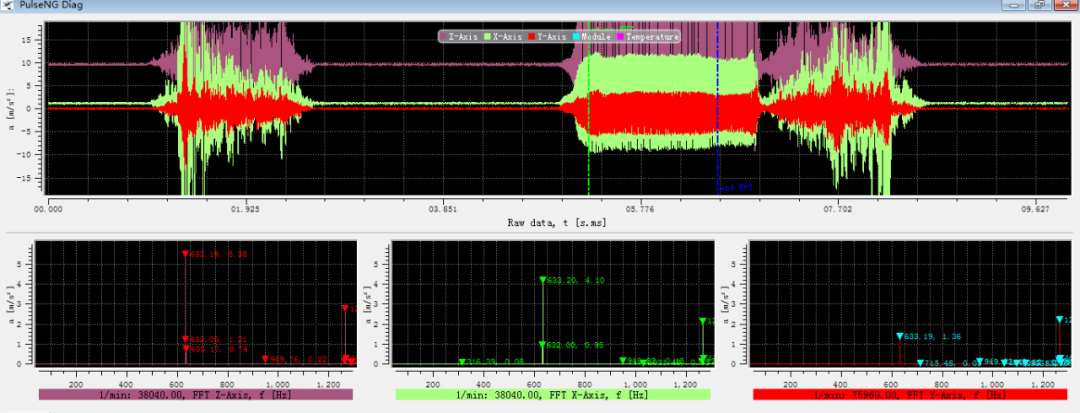
Figure 2. Vibration Spectrum of the Ball Screw and Nut
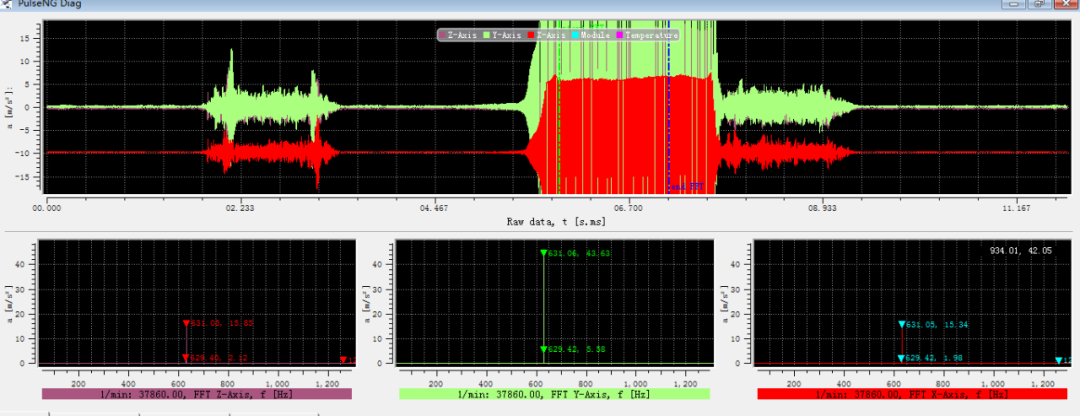
Figure 3. Vibration Spectrum of the Servo Motor
Analysis of the measurement results in Figures 2 and 3 shows that during the vibration, the vibration frequency at both the servo motor and the ball screw and nut is approximately 633 Hz, and the vibration acceleration is at its maximum. This vibration frequency can be suppressed and attenuated using the FIDIA system's filter function. After setting the parameters (see Figure 4), activating the filter function and rerunning the test eliminates the vibration.
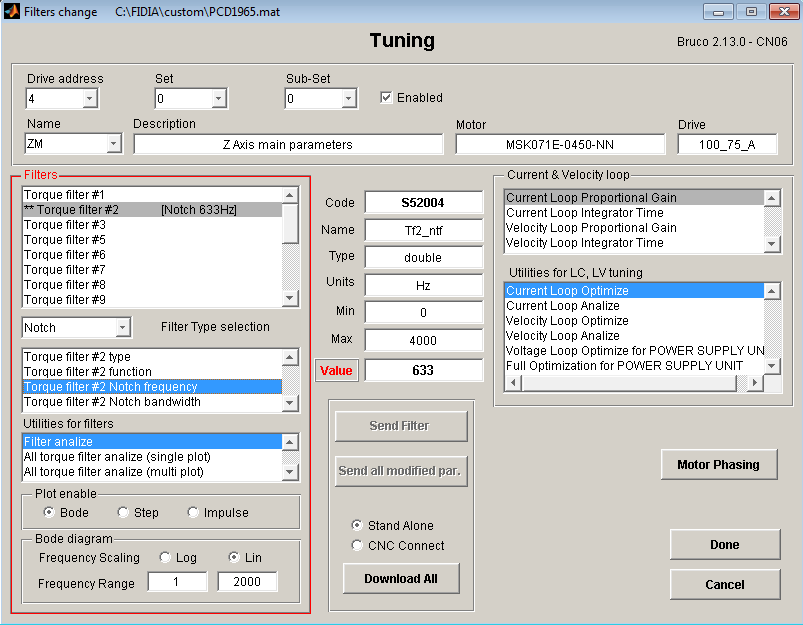
Figure 4. Filter Parameter Setting Interface
4. Conclusion
Both methods described above can solve the machine tool vibration problem. However, the second method, which uses a three-axis accelerometer to measure the vibration frequency and utilizes the CNC system's filter, can solve the vibration problem without reducing the dynamic characteristics of the Z-axis. Therefore, the second method is recommended.
How to define Swing over Bed, Swing over Cross Slide and Swing over Gap?
About Machine Models
Lathe turning is one of the most frequently used machining technology. To order a proper size of lathe machine with correct specifications, swing is first considered since it represents the diameter allowance for workpiece.
Height of center line is center height. Center height is the key to form different swing sizes.
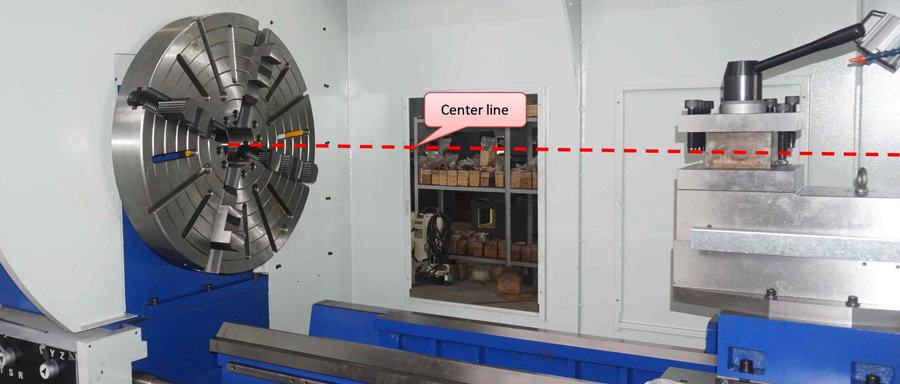
There will be several possible swings: Swing over bed, swing over cross slide and swing over gap:
SWING OVER BED
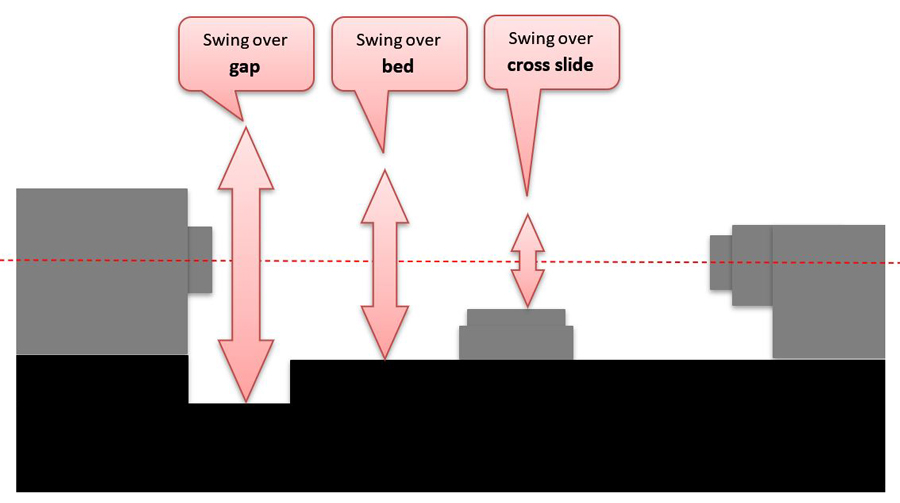
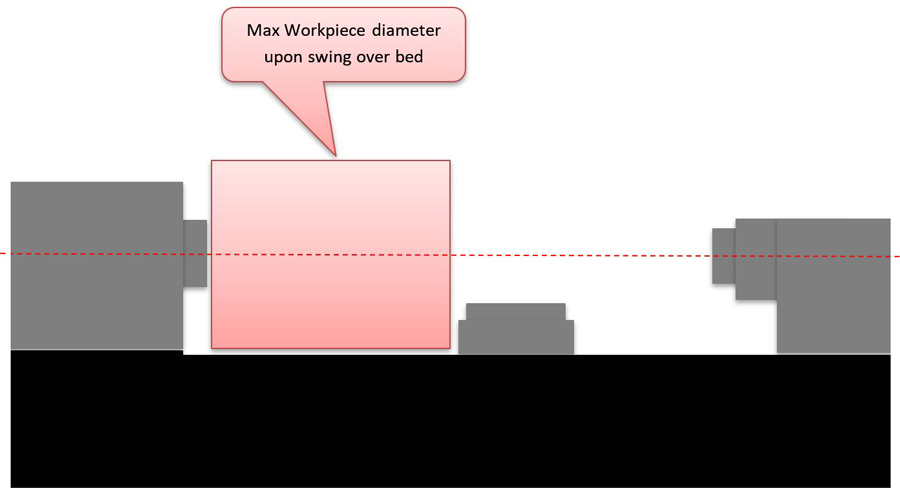
Swing over bed is also swing over Z axis guide way (longitudinal guide way). Jiangsu ZINO Machinery Manufacturing creates the machine model names by Swing over bed for easy identification. The X axis travel (cross travel) is also designed for possibility of turning max. diameter of workpiece upon swing over bed.
SWING OVER CROSSSLIDE
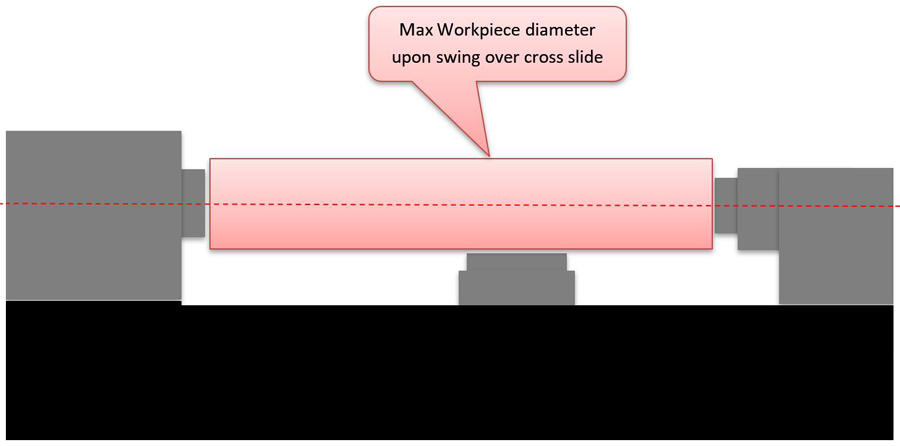
Swing over cross slide is diameter allowance upon the cross slide (or worktable). When workpiece is long and cross slide has to go through the workpiece for outside turning, such as still roller, pipe etc., it is necessary to consider swing over cross slide. The swing over cross slide will be smaller than swing bed.
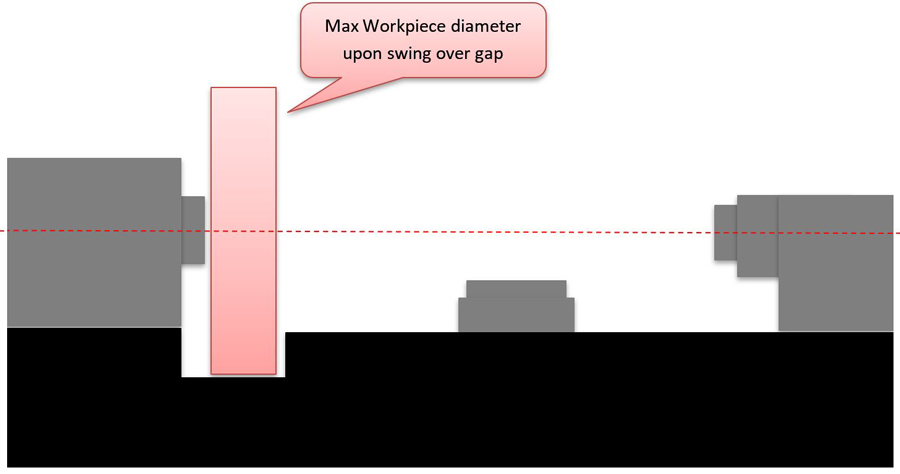
SWING OVER GAP
Some lathe machines have the design of gap on bed to allow workpiece bigger than swing over cross slide. But this gap is created by removing gap block and take some distance of Z axis guide way. Therefore, only for some special flange type workpiece the customer will ask for gap on bed. Normally lathe with gap is for facing machining.
Swing over gap is available and optional for all Jiangsu ZINO Machinery Manufacturing models.
What Is the Swing of a Lathe? Can You Turn Metal on a Wood Lathe?and The Swing on a Lathe: Understanding Its Importance
Lathe machines are essential tools in machining, with the swing being one of the key features. In this article, we'll break down what lathe swing is, how to determine it, its relevance for milling machines, and how it affects machining capabilities.
When selecting the right lathe for your workshop or manufacturing project, two questions frequently arise: What is the swing of a lathe, and can you turn metal on a wood lathe? Understanding these concepts is key to choosing the right machine, improving machining accuracy, and avoiding costly errors. This article breaks down both questions clearly to help you decide which lathe fits your needs best.
1.What Is the Swing of a Lathe?
The swing of a lathe refers to the maximum diameter of a workpiece that can rotate on the lathe without touching the bed. Simply put, swing equals twice the distance from the spindle center to the lathe bed.
For instance, a lathe with a 300 mm swing can handle workpieces up to 300 mm in diameter. A larger swing lets you machine bigger parts.
2.Why Is Swing Important?
Swing determines the maximum size of material you can turn and influences your lathe selection for woodworking or metalworking. It’s particularly critical for industries like automotive, furniture, and mechanical manufacturing. Common types include swing over bed and swing over cross slide (usually smaller than swing over bed).
3.What is the Swing on a Lathe?
The "swing" of a lathe refers to the maximum diameter of the workpiece that the machine can accommodate over the bed. In simpler terms, it’s the largest diameter of material that can be placed on the lathe and still rotate without hitting any parts of the machine. The swing is measured from the centerline of the spindle to the bed, and it defines the lathe's capacity to handle large workpieces.
4.How to Determine Lathe Swing?
To determine the swing of a lathe, you measure the distance from the center of the spindle to the top of the bed, then multiply that value by 2. For example, if the distance from the spindle center to the bed is 8 inches, the lathe’s swing would be 16 inches. This measurement tells you how large of a diameter you can work with on your lathe.
5.What is Swing on a Milling Machine?
In contrast to lathes, a milling machine's swing typically refers to the maximum size of a workpiece that can fit on the machine's table or the largest circle the machine’s head can rotate within. Unlike lathe swing, which is about the machine's bed, milling machine swing concerns the table's ability to hold and rotate the workpiece for cutting.
6.What Does the Swing of a Lathe Indicate About the Largest Workpiece It Can Handle?
The swing of a lathe indicates the largest workpiece diameter that can be placed on the lathe bed. It does not directly indicate how long a workpiece can be. For example, a lathe with a swing of 12 inches means it can handle a workpiece with a diameter up to 12 inches. However, the length of the workpiece will depend on other factors, like the lathe’s bed length.
7.Can You Turn Metal on a Wood Lathe?
The short answer: generally no, and we don’t recommend it. While it might seem feasible, wood lathes aren’t designed for metal turning—using them for this purpose is unsafe and inafficient.
Why Wood Lathes Aren’t Suitable for MetalWood lathes lack the structural rigidity needed to handle metal cutting forces. They also have inadequate speed control: metal turning requires lower, more stable spindle speeds, whereas woo` lathes typically run at higher RPMs. Additionally, wood lathes don’t have the proper tool rest or carriage system that metal lathes use for precision cutting. Finally, metal chips are sharp and hot, increasing injury risks when using a wood lathe.
Experienced users might lightly shape soft metals like aluminum or brass on a heavy-duty wood lathe in rare cases. But this isn’t suitable for professional or industrial use.
Wood Lathe vs. Metal Lathe: Key DiffarencesHow to Choose the Right Lathe
| Feature | Wood Lathe | Metal Lathe |
| Materials | Wood,plastic | Steel,aluminum, brass |
| Machine Rigidity | Low | High |
| Precision | Medium<+td> | High |
| Cutting Method | Hand-held tools | Tool post & carriage |
| Safety for Metal | Not recommended | Designed for it |
When picking a lathe, always consider the material type (wood or metal), maximum workpiece diameter (swing), required precision, and production volume. If your work involves metal components, a metal lathe with sufficient swing and rigidity is the correct, safest choice.
Conclusion
To sum up: What is the swing of a lathe? It’s the maximum diameter a lathe can turn over its bed. Can you turn metal on a wood lathe? While technically possible in rare cases, it’s not safe or recommended for proper metalworking. Understanding these differences will help you invest in the right machine, boost productivity, and ensure operator safety