
 +86 18501566670

What are the common faults and preventive measures for the common lathe SN50?
 Time:2026-01-22
  Visits:732
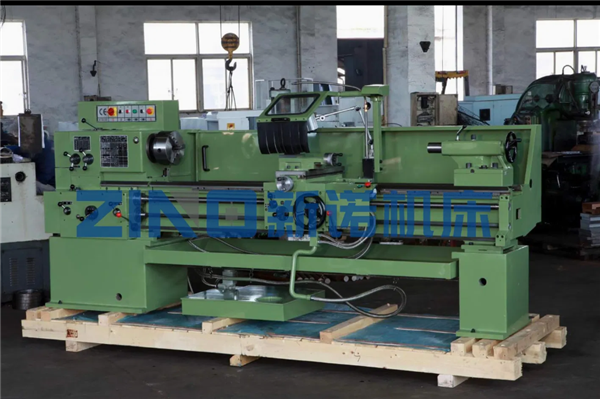
The SN50 conventional lathe is a widely used metal processing equipment in mechanical manufacturing, featuring high rigidity, strong cutting capacity and adaptability to various workpiece processing. However, under long-term continuous operation, frequent load changes and improper operation, the lathe is prone to various mechanical and electrical faults, which directly affect processing accuracy, production efficiency and service life. Mastering its common faults and targeted preventive measures is the key to ensuring stable operation of the equipment and reducing maintenance costs. This paper sorts out the typical faults of common lathe SN50 in spindle system, feed system, tool rest and electrical system, and puts forward systematic preventive and maintenance measures, with a view to providing practical reference for on-site operation and maintenance personnel.
Common Faults of common lathe SN50
1. Spindle system faults
The spindle system is the core component of the lathe for driving workpiece rotation, and its faults are the most common in actual use. First, the spindle rotation has abnormal noise and vibration, which is mainly caused by excessive wear of spindle bearing, lack of lubricating oil or mixed impurities in the oil, and loose bearing locking nut leading to reduced coaxiality. Second, the spindle speed is unstable or cannot be adjusted, which is mostly related to the failure of the speed change mechanism, such as serious wear of the shift gear, jamming of the shift fork, or oil leakage and pressure loss of the hydraulic speed regulation system. In addition, the spindle clamping force is insufficient, resulting in the workpiece slipping during cutting, which is usually due to the wear of the chuck jaw, the aging of the clamping cylinder seal ring or the insufficient hydraulic pressure.
2. Feed system faults
The feed system determines the processing precision of the workpiece’s longitudinal and transverse dimensions, and its faults are mainly reflected in the aspects of feed inaccuracy and movement jamming. Longitudinal or transverse feed has crawl phenomenon, that is, the tool rest moves unevenly during feeding, which is caused by the excessive wear of the lead screw and nut pair, the lack of lubrication of the guide rail, or the too tight adjustment of the feed box clutch. The feed accuracy is reduced, such as the actual processing size deviating from the preset value, which is mostly due to the wear of the transmission gear in the feed box, the deformation of the lead screw, or the loose connection between the feed handwheel and the transmission shaft. In addition, the feed mechanism cannot move normally, which is often caused by the jamming of the shift fork in the feed box, the breakage of the transmission pin or the deformation of the guide rail slide block.
3. Tool rest faults
The tool rest is responsible for clamping the cutting tool, and its faults directly affect the tool changing efficiency and processing stability. The common faults include the tool rest clamping being not firm, leading to the tool shifting during cutting and damaging the workpiece, which is caused by the wear of the tool rest positioning pin, the insufficient torque of the clamping motor or the aging of the positioning spring. The tool rest cannot rotate or tool change is inaccurate, which is mostly related to the failure of the tool rest transmission mechanism, such as the wear of the worm gear and worm, the jamming of the positioning slot or the electrical fault of the tool rest control circuit. In addition, the tool rest has abnormal noise during rotation, which is usually due to the lack of lubrication of the internal gear pair or the collision caused by the loose fixing bolt.
4. Electrical system faults
The electrical system is the "brain" of the SN50 lathe, controlling the start, stop and speed regulation of each mechanism, and its faults are mostly manifested in electrical component damage and circuit connection problems. The lathe cannot start normally, which is commonly caused by the burnout of the main contactor, the tripping of the thermal relay due to overload, or the damage of the start button and travel switch. The motor overheats and burns out, which is due to the long-term overload operation of the motor, the short circuit of the stator winding, or the blockage of the motor cooling fan leading to poor heat dissipation. In addition, the indicator light is not on, the electromagnetic valve does not act and other small faults are mostly caused by the loose wiring terminal, the aging of the fuse or the damage of the small electrical components.
5. Hydraulic and lubrication system faults
The hydraulic system provides power for spindle clamping, tool rest movement and other actions, and the lubrication system ensures the normal operation of each friction pair, and their faults are mostly related to oil quality and pipeline problems. The hydraulic system pressure is insufficient, leading to the failure of each hydraulic actuator to work normally, which is caused by the wear of the hydraulic pump, the aging and oil leakage of the pipeline seal ring, or the blockage of the oil filter. The lubrication system is not working properly, such as insufficient oil supply or no oil supply, which is mostly due to the burnout of the lubricating pump motor, the blockage of the oil pipe or the too low oil level in the oil tank. In addition, the mixing of water and impurities in the hydraulic oil and lubricating oil will accelerate the wear of each component, which is a potential fault hidden danger.
Preventive Measures for SN50 Conventional Lathe Faults
1. Standardize operation and reduce man-made faults
Most of the lathe faults are caused by improper operation, so standardizing the operation process is the primary preventive measure. Before starting the machine, the operator must conduct a comprehensive pre-operation inspection, including checking the oil level of the hydraulic and lubrication systems, the tightness of the chuck and tool rest, the sensitivity of the electrical switches and the integrity of the safety protection devices, and starting the machine for idle running for 3-5 minutes to ensure that each mechanism operates normally before formal processing. During processing, it is strictly forbidden to overload cutting beyond the lathe’s rated processing capacity, avoid frequent and rapid speed change and feed adjustment, and prevent the transmission mechanism from being impacted by sudden load changes. When replacing the workpiece and tool, the machine must be stopped completely to avoid the tool rest and chuck colliding with the workpiece. After the operation, the machine should be cleaned in time, the cutting chips on the guide rail, lead screw and spindle should be removed, and the anti-rust oil should be coated on the metal surface to prevent corrosion.
2. Establish a regular maintenance system
Formulating and implementing a detailed regular maintenance system is the key to extending the service life of the lathe and reducing sudden faults, and the maintenance work should be divided into daily maintenance, weekly maintenance and monthly maintenance according to the cycle. Daily maintenance is mainly completed by the operator, including cleaning the equipment, checking the oil level and oil supply of the lubrication system, tightening the loose bolts and nuts, and recording the operation status of the lathe. Weekly maintenance focuses on checking the wear status of the transmission parts such as gears and lead screws, the tightness of the hydraulic pipeline and the sensitivity of the travel switch, and cleaning the oil filter of the lubrication system to prevent blockage. Monthly maintenance is completed by professional maintenance personnel, including disassembly and inspection of the spindle bearing, measurement of the wear of the lead screw and nut pair, testing of the hydraulic system pressure and electrical component insulation performance, replacement of the aging seal ring, fuse and other vulnerable parts, and adjustment of the clearance of each friction pair to ensure the processing accuracy of the lathe. In addition, for the key components such as spindle bearing and hydraulic pump, the maintenance cycle should be shortened according to the actual operation time, and the worn parts should be replaced in time to avoid minor faults developing into major faults.
3. Strengthen the management of hydraulic and lubrication systems
The normal operation of hydraulic and lubrication systems is the guarantee for the stable operation of the lathe, and their management should focus on oil quality and pipeline maintenance. First, select hydraulic oil and lubricating oil that meet the technical requirements of the SN50 lathe, and it is strictly forbidden to mix different brands and models of oil products to avoid oil deterioration and poor lubrication effect. Regularly check the oil quality, and replace the hydraulic oil and lubricating oil in time when the oil appears turbid, discolored or mixed with impurities; the oil change cycle is generally 3-6 months, and can be shortened appropriately for lathes in continuous operation. Second, clean the oil tank, oil filter and oil pipe regularly, remove the sediment and impurities in the oil tank, and replace the filter element of the oil filter in time to ensure the unobstructed oil circuit. Third, check the sealing performance of the hydraulic pipeline and joint regularly, replace the aging and damaged seal ring in time to prevent oil leakage, and exhaust the air in the hydraulic system regularly to ensure the stability of the system pressure. In addition, keep the oil tank and the surrounding environment clean, and prevent cutting chips, dust and water from entering the oil system.
4. Strengthen the inspection and maintenance of electrical system
The electrical system has the characteristics of high concealment of faults, so regular inspection and maintenance should be strengthened to eliminate hidden dangers in time. First, check the electrical components regularly, including contactors, relays, motors, travel switches and electromagnetic valves, check the contact wear of the contactor, the insulation performance of the motor winding and the sensitivity of the switch, and replace the damaged electrical components in time. Second, check the circuit connection status, tighten the loose wiring terminals, replace the aging and cracked wires, and wrap the exposed wires with insulating tape to prevent short circuit and electric leakage. Third, install a suitable protective device for the electrical control box, prevent cutting chips, coolant and dust from entering the box, and clean the dust inside the control box regularly to ensure good heat dissipation of the electrical components. In addition, the operator should be trained to master the basic electrical fault judgment methods, and when an electrical fault occurs, the power should be cut off in time and professional electricians should be notified for maintenance to avoid blind operation causing secondary damage.
5. Strengthen the training of operators and maintenance personnel
The professional quality of operators and maintenance personnel is directly related to the operation and maintenance level of the lathe, so regular technical training should be carried out to improve their professional ability. For operators, the training content should include the structural principle, operation specifications, common fault identification and emergency handling methods of the SN50 lathe, so that they can correctly operate the lathe, identify the early signs of faults in time and take corresponding measures. For maintenance personnel, the training should focus on the in-depth maintenance technology of each system of the lathe, such as spindle bearing disassembly and assembly, hydraulic system pressure adjustment, electrical circuit fault diagnosis and maintenance, and improve their ability to handle complex faults. In addition, a equipment operation and maintenance file should be established, recording the operation time, processing tasks, fault occurrence and maintenance of the lathe in detail, so as to analyze the fault law and formulate more targeted preventive measures.
Conclusion
The common lathe SN50, as an important metal processing equipment, its fault occurrence is the result of the combined action of man-made operation, component wear, system aging and other factors. The common faults are concentrated in the spindle system, feed system, tool rest, electrical system, hydraulic and lubrication system, and most of the faults can be effectively avoided by taking scientific and reasonable preventive measures. In the actual production process, it is necessary to take the standardization of operation as the foundation, the establishment of a regular maintenance system as the core, the strengthening of the management of hydraulic, lubrication and electrical systems as the key, and the improvement of the professional quality of operators and maintenance personnel as the guarantee, to form a full-process and all-round equipment management system. Only by combining daily maintenance, regular inspection and fault early warning, can we effectively reduce the occurrence of lathe faults, ensure the stable and high-efficiency operation of the SN50 lathe, improve processing accuracy and production efficiency, and reduce maintenance costs, so as to give full play to the equipment's production capacity and create greater economic benefits for the enterprise.