
 +86 18501566670

Analysis of Typical Fault Diagnosis and Maintenance Strategies for cnc lathe machine CK6150
 Time:2026-02-11
  Visits:748
1.Equipment Overview
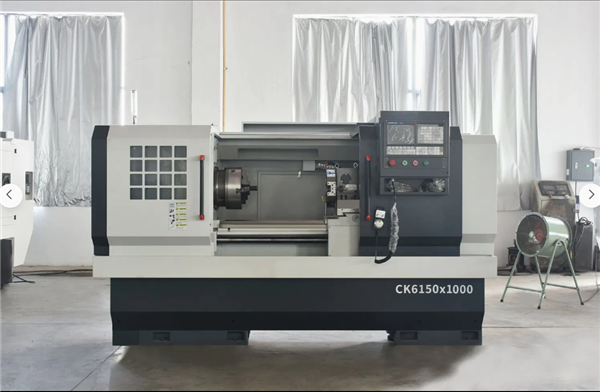
CK6150 is an economical and widely used CNC horizontal lathe,which is extensively applied to the turning of shaft and disc-type components.It boasts a mature structure,excellent rigidity,a moderate failure rate,and convenient maintenance.The lathe primarily consists of a CNC system,servo drive,spindle unit,feed transmission,hydraulic/pneumatic system,cooling and lubrication system,bed guide rail,tool post,and other components.
This article takes the FANUC 0i series and Guangshu GSK980 series as typical systems,summarizes the most common and frequently occurring fault types of CK6150,and provides diagnostic ideas,troubleshooting methods,and maintenance strategies,which can be directly applied to equipment management,maintenance reports,and academic writing.
II.Classification and Diagnosis of Typical Faults in cnc lathe machine CK6150
(1)Numerical control system and electrical fault
1.No display when turned on,black screen,alarm light on
-Possible reasons:
Power supply phase loss,emergency stop button not reset,servo transformer failure,system motherboard/power module damaged,and loose wiring.
-Diagnosis:
First,check the emergency stop,air switch,and fuse;then measure the system DC24V and servo three-phase input;finally,check the system alarm code.
-Processing:
Reset the emergency stop,secure the wiring,replace the fuse,and repair the power module.
2.Servo alarm:overload,overcurrent,encoder fault
-Common alarms:
X/Z axis servo overload,excessive position deviation,encoder disconnection.
-Reason:
Mechanical jamming,lack of lubrication in the guide rail,damaged screw bearing,excessive load,and poor contact of encoder cable.
-Processing:
Manually rotate the gear to check for mechanical jamming;inspect the encoder cable;adjust the servo gain;replace the bearing/lead screw.
(II)Spindle failure(most influential on machining accuracy and efficiency)
1.The main shaft does not rotate,the rotational speed is unstable,and there is abnormal noise
-Reason:
Inverter failure,belt loosening/breaking,spindle bearing damage,encoder signal abnormality,hydraulic chuck not clamped interlock.
-Diagnosis:
Check the alarm code of the frequency converter;listen for the location of the abnormal noise;measure the current of the spindle motor;check the tension of the belt.
-Processing:
Adjust the belt tension,replace the bearing,repair the frequency converter,and check the spindle encoder.
2.The main shaft is heating up,with an excessively high temperature rise
-Reason:
Dried-up lubricating grease,improper bearing clearance,overtight assembly,and long-term heavy load.
-Processing:
Clean the spindle box,replace the lubricating grease,readjust the preload,and control the continuous machining time.
(III)Fault in X/Z feed axis(directly affecting dimensional accuracy)
1.Inaccurate positioning,dimensional drift,and large backlash
-Reason:
Ball screw wear,coupling looseness,guide rail strip looseness,and loss of servo parameters.
-Diagnosis:
Measure the backlash and repeatability accuracy using a gauge;check the lubrication condition of the screw nut pair.
-Processing:
Tighten the coupling,adjust the insert,compensate for the gap,and replace the screw nut.
2.Crawling,shaking,and unstable operation
-Reason:
Insufficient lubrication of the guide rail,unreasonable servo gain,bent screw,and damaged guide rail.
-Processing:
Improve lubrication,optimize servo parameters,repair and scrape the guide rail,and replace damaged parts.
(IV)Automatic rotary tool post failure(a common fault in CK6150)
1.The tool post does not rotate,rotates continuously,does not rotate in place,or does not lock tightly
-Reason:
The sender disc(Hall element)is damaged,the motor is faulty,the mechanism is stuck,the worm gear and worm are worn,and the wiring is loose.
-Typical phenomenon:
The tool post keeps rotating,the tool position cannot be found,and the tool change exceeds the time limit,triggering an alarm.
-Processing:
Replace the sending disc,tighten the wiring,clean the tool post,adjust the clearance between the worm gear and worm,and repair the motor.
2.Difficulty in lifting the tool post and insufficient clamping force
-Reason:
Insufficient hydraulic/motor thrust,wear of end face gear disc,and foreign object jamming.
-Processing:
Clean the gear disc,adjust the clamping mechanism,and repair the hydraulic system.
(V)Faults in hydraulic,cooling,and lubrication systems
1.Abnormal action of hydraulic chuck/tailstock
-Reason:
Insufficient hydraulic pressure,oil leakage,stuck solenoid valve,and clogged filter element.
-Processing:
Refuel,replace filter element,repair solenoid valve,and handle leakage.
2.The lubrication pump is not dispensing oil,and the guide rail is short of oil
-Reason:
Oil pump damage,oil passage blockage,low oil level,and incorrect lubrication time parameters.
-Processing:
Clean the oil circuit,replace the oil pump,and set a reasonable automatic lubrication interval.
3.The cooling pump does not operate and the water output is low
-Reason:
The motor is burned out,the filter is clogged,and the pipeline is bent.
-Processing:
Clean the filter,replace the water pump,and organize the piping.
(VI)Mechanical precision failure
1.Workpiece taper,ovality,and vibration marks
-Reason:
Large radial runout of the spindle,misalignment of the center,non-straight guide rails,loose chuck,and worn tool tip.
-Processing:
Calibrate the main shaft,adjust the coaxiality of the tailstock,repair the guide rail,tighten the chuck,and replace the cutting blade.
2.Lathe bed vibration and poor machining surface roughness
-Reason:
Loose foundation,uneven ground,damaged bearings,and unreasonable cutting parameters.
-Processing:
Re-level,tighten the foundation,replace wear parts,and optimize cutting parameters.
III.General Fault Diagnosis Principles for CK6150(Can be Incorporated into Papers)
1.First,deal with the electrical aspect,then proceed to the mechanical aspect
First,check the alarm,inspect the wiring,and measure the voltage to rule out electrical issues before dismantling the machinery.
2.Software comes before hardware
First,verify the parameters,program,and coordinate system,and then suspect hardware damage.
3.Start with the simple and gradually move on to the complex
First,perform an emergency stop,check the power supply,wiring,and fuses.Then,inspect the mainboard,servo,and lead screw.
4.First the exterior,then the interior
First,check the sensor,switch,and motor wires.Then,disassemble the motor,screw,and spindle.
5.Public use before private use
First,check the main power supply,transformer,and grounding,and then locate the single-axis fault.
IV.CK6150 Full-Cycle Maintenance Strategy
1.Daily maintenance(per shift)
-Clean the chips,wipe the guide rails,and clean the protective cover.
-Check the emergency stop,door interlock,and operation panel functions.
-Observe whether there are any leaks in the lubrication,cooling,and hydraulic systems.
-Check the operating sound of the spindle,tool post,and feed axis.
2.Weekly maintenance
-Clean the dust from the electrical cabinet and inspect the fan.
-Check whether the X/Z axis protection is damaged.
-Check the belt tension and the locking condition of the tool post.
-Clean the cooling box and filter.
3.Monthly maintenance
-Check the grounding and ensure the wiring terminals are securely fastened.
-Check the servo motor and encoder cables.
-Test the limit and homing accuracy of each axis.
-Check the hydraulic oil level and the condition of the lubricating grease.
4.Annual overhaul
-Cleaning,oil change,and bearing replacement of the main spindle box.
-Guide rail scraping and grinding/plastic coating repair,adjustment of inlay strip.
-Check,replace,or pre-tighten the ball screw.
-Comprehensive accuracy testing:positioning accuracy,repeatability,backlash,and coaxiality.
-System parameter backup,battery replacement,and overall machine accuracy compensation.
V.Fault Prevention and Management Suggestions
1.Establish equipment checklist,maintenance records,and accuracy files.
2.Strictly implement the"five fixings"for lubrication:fixed point,fixed quality,fixed quantity,fixed time,and fixed person.
3.Operator training:Standardize the processes of tool setting,clamping,programming,and machine startup and shutdown.
4.Spare key consumable parts:sender disc,fuse,contactor,encoder cable,bearing,belt.
5.Regularly back up system parameters,PLC programs,and tool compensation.
VI.Conclusion
The malfunctions of the CNC lathe CK6150 are primarily concentrated in five modules:the electrical system,the spindle,the feed axis,the tool post,and the lubrication and hydraulic system.Following the diagnostic logic of"starting with the easy and simple,then moving to the complex and difficult;focusing on the electrical issues first,then the mechanical ones;and examining the external components before the internal ones,"can quickly pinpoint the problem.Through a three-tier maintenance system consisting of daily spot checks,regular maintenance,and annual overhauls,the failure rate can be significantly reduced,equipment lifespan can be extended,and processing accuracy and production continuity can be ensured.